

Tsolo
Intimate Cartographies
A map drawn through cloth, beginning in the small Eastern Cape town of Tsolo.
Intimate Cartographies traces the places that shape us. This chapter returns to Tsolo, the hometown shared by Simphiwe Dana and Zozibini Tunzi, who came together for the campaign and spoke about the town, and the different lives each has built from it.
The Tsolo Dress looks to the striping, braiding and buttons of Xhosa womenswear, and to the ochre long used to dye its cloth. It treats that heritage as something still moving: absorbed, adapted and made new by every generation that wears it.
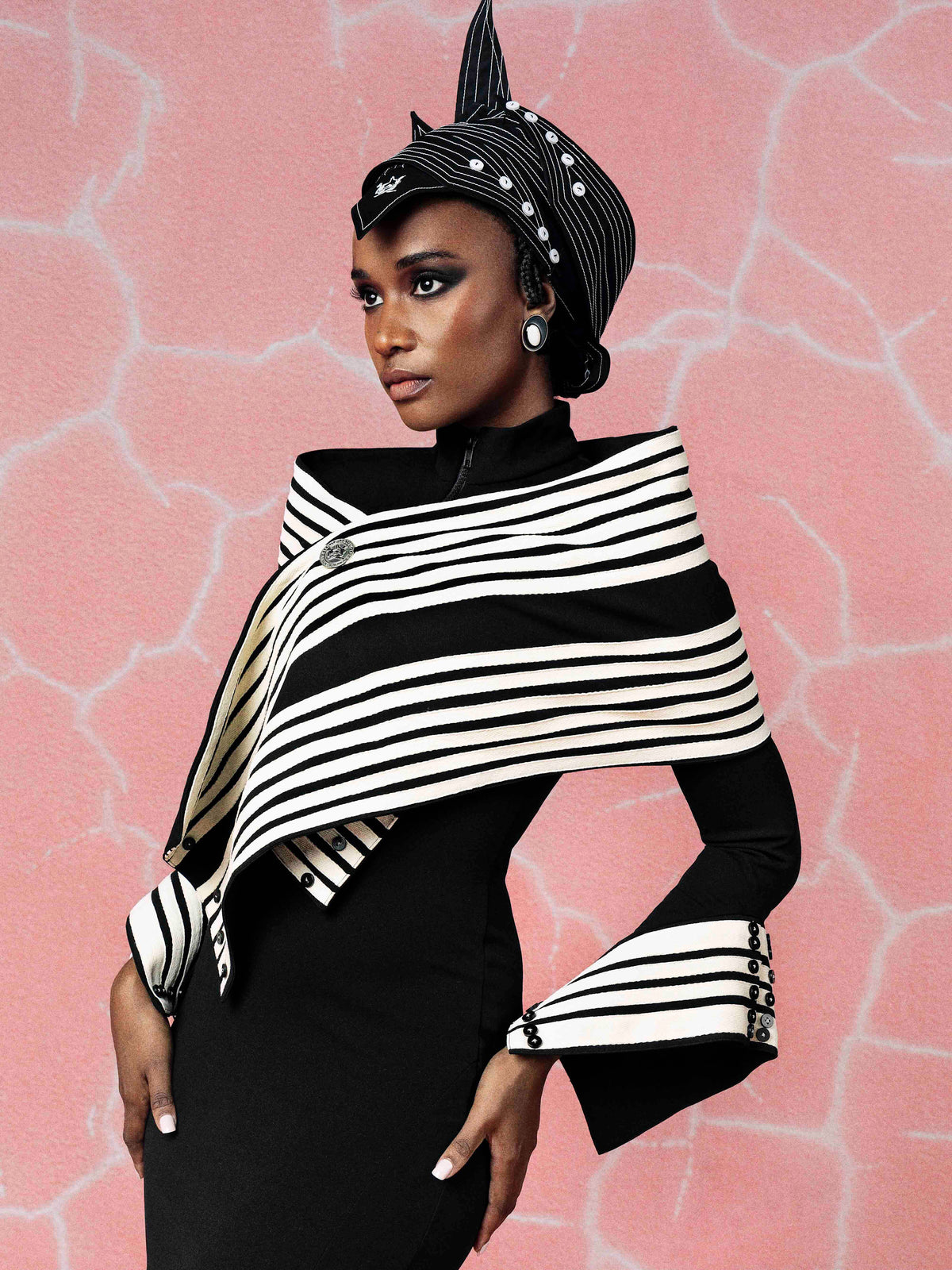
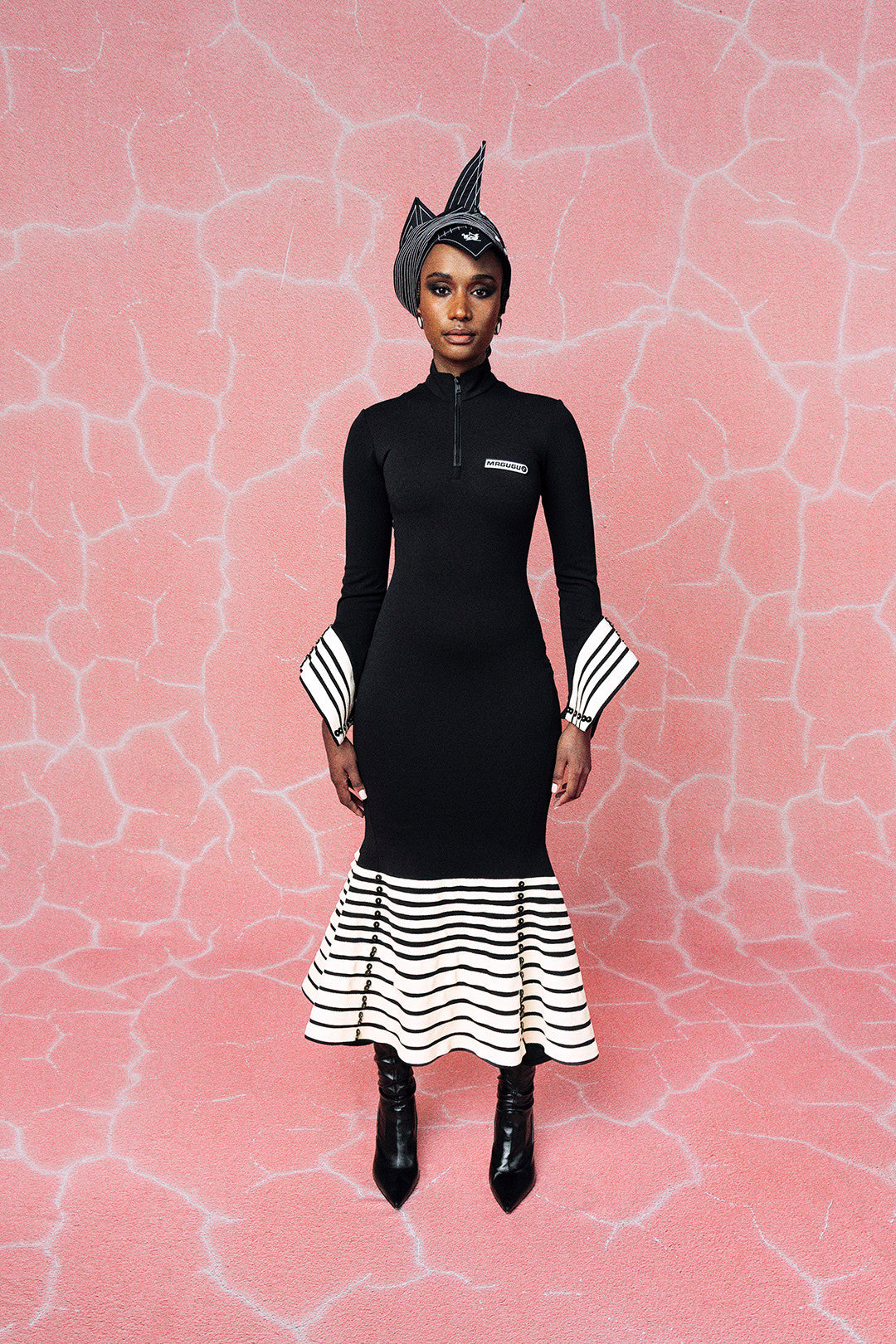
The signature piece of Intimate Cartographies: Tsolo, the Tsolo Dress translates the graphic banding found in Xhosa traditional dress into an elongated black column. Contrasting ivory bands articulate the sculptural cuffs and fluted hem, punctuated by rows of buttons that emphasise their geometry and movement. A high collar and half-zip neckline sharpen the silhouette, balancing cultural reference with the precise language of contemporary dress.
Each Tsolo Dress is accompanied by an iBhayi (shawl)
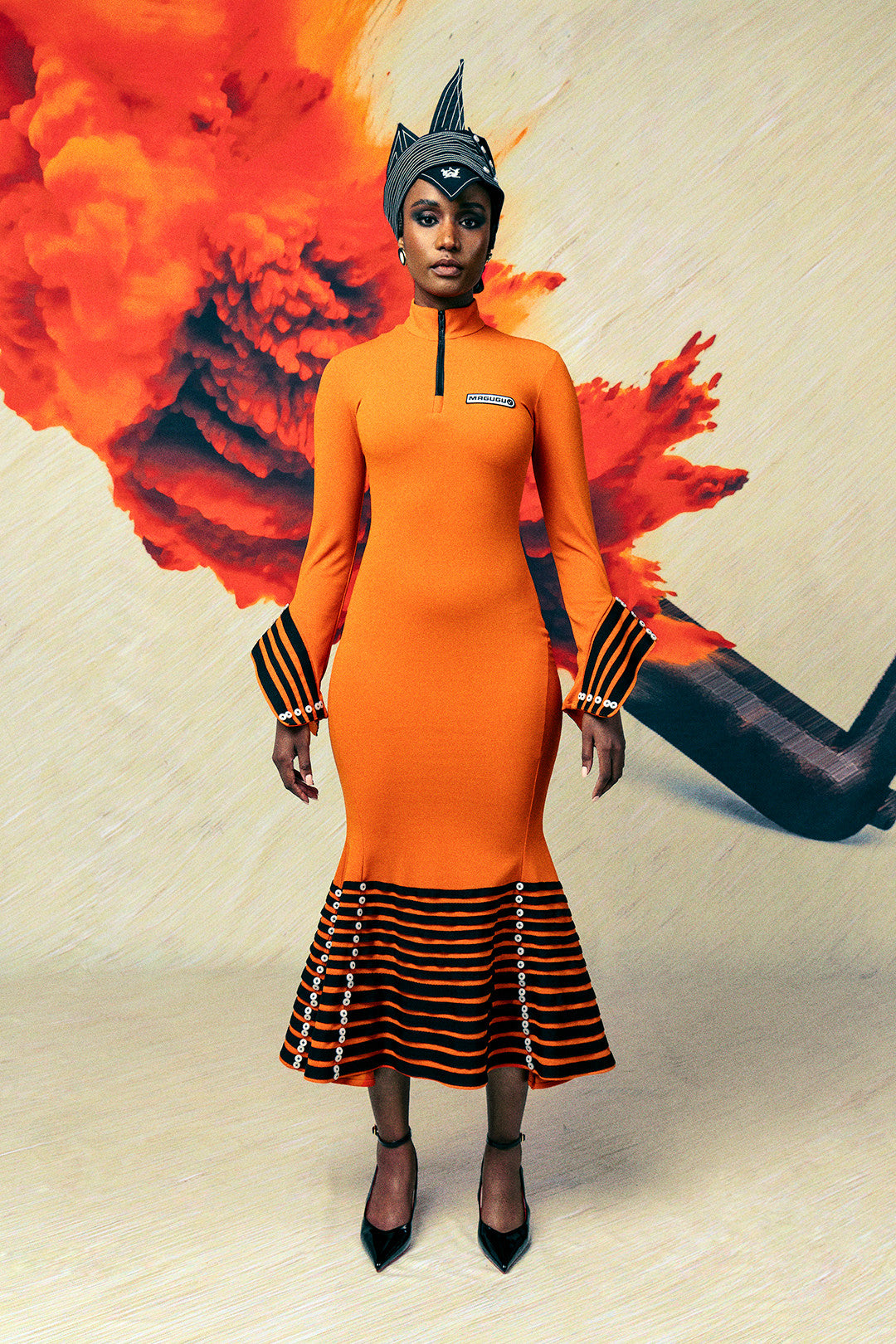
Created for Intimate Cartographies: Tsolo, the Tsolo Dress draws from the graphic banding of Xhosa traditional dress, reinterpreting the reference through an elongated contemporary silhouette. Rendered in vivid ochre, the fitted column expands into a fluted hem traced with contrasting black bands and rows of metallic buttons; the same construction reappears at the sculptural cuffs. A high collar and half-zip neckline bring a precise, modern finish.
Each Tsolo Dress is accompanied by an iBhayi (Shawl)
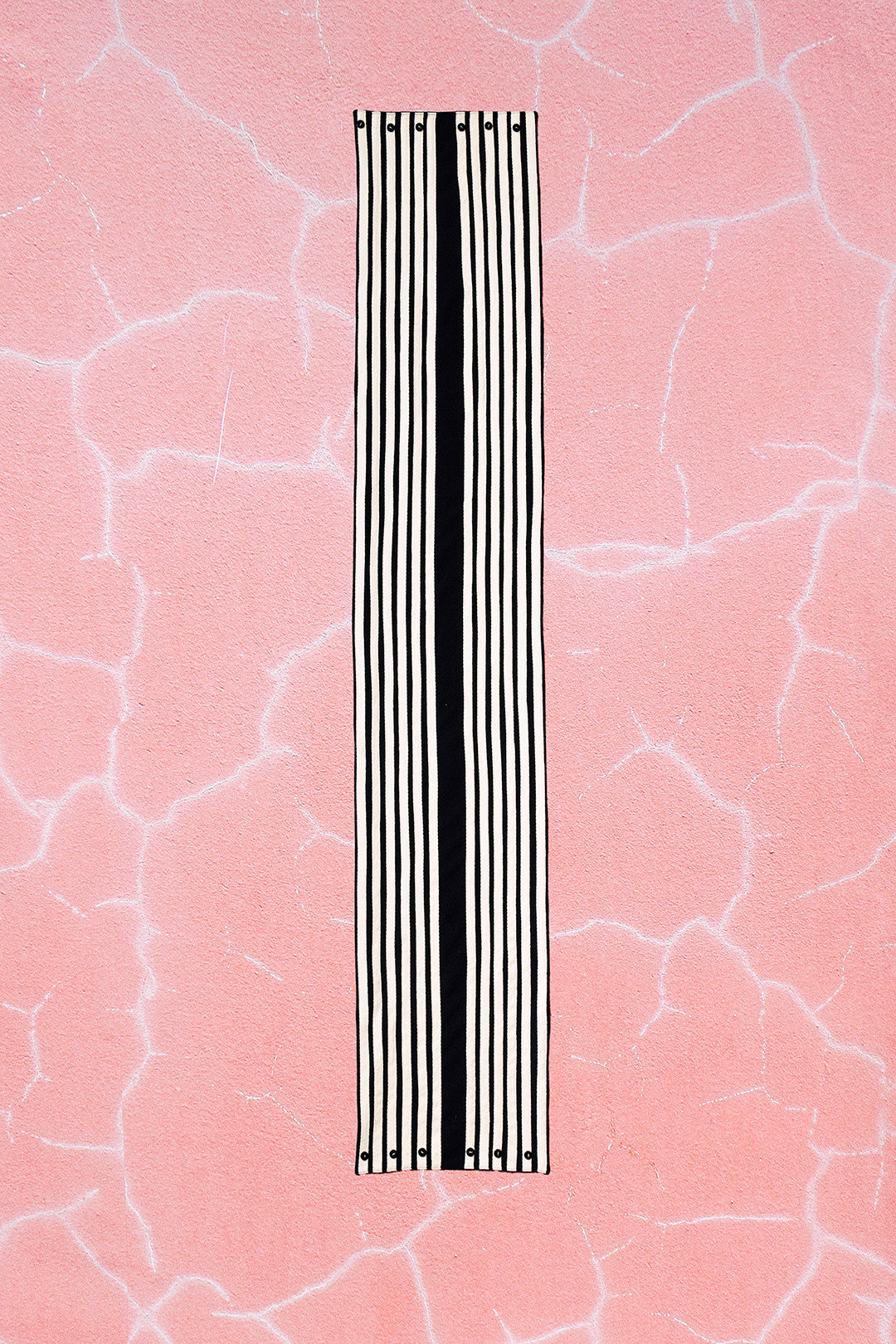
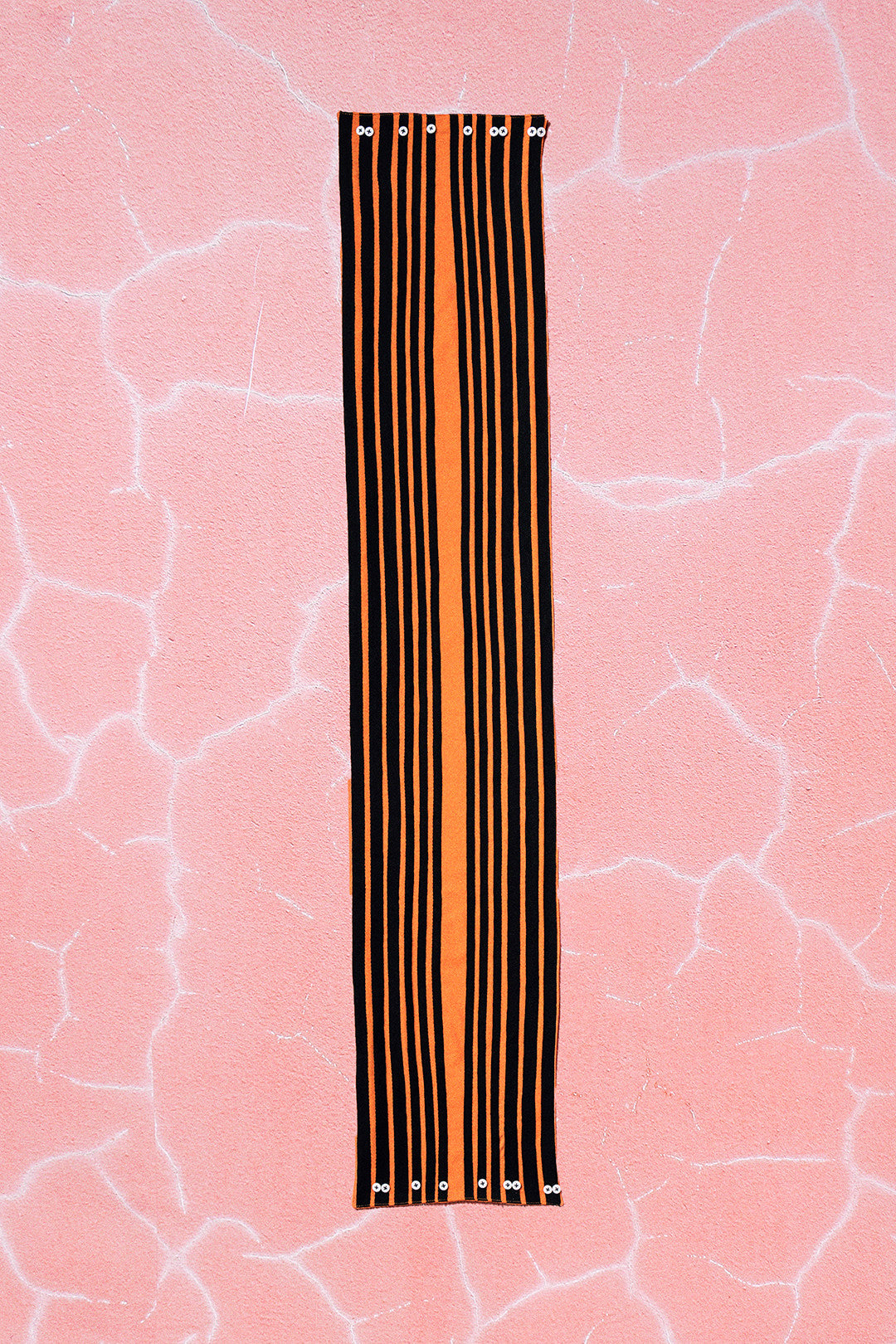
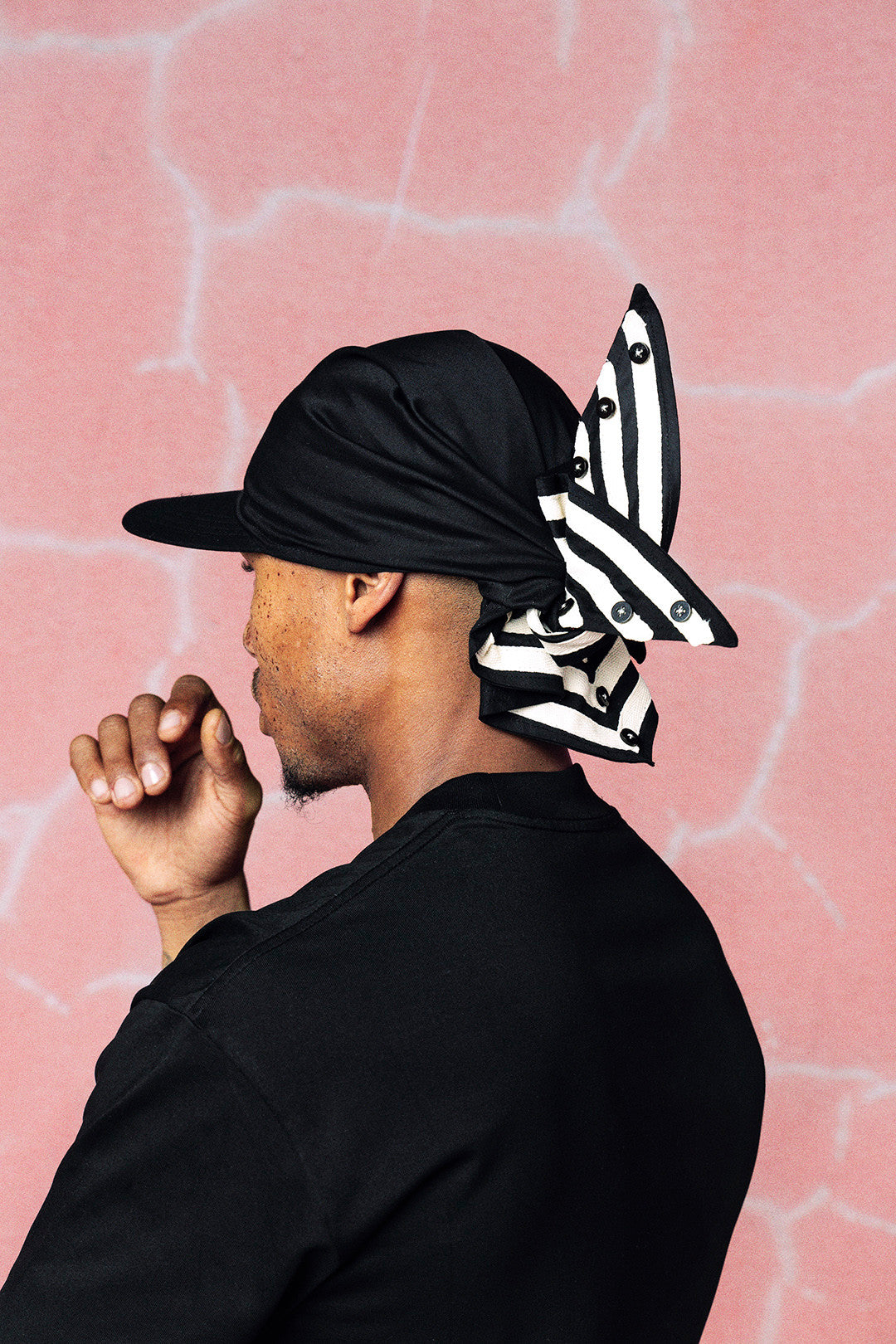
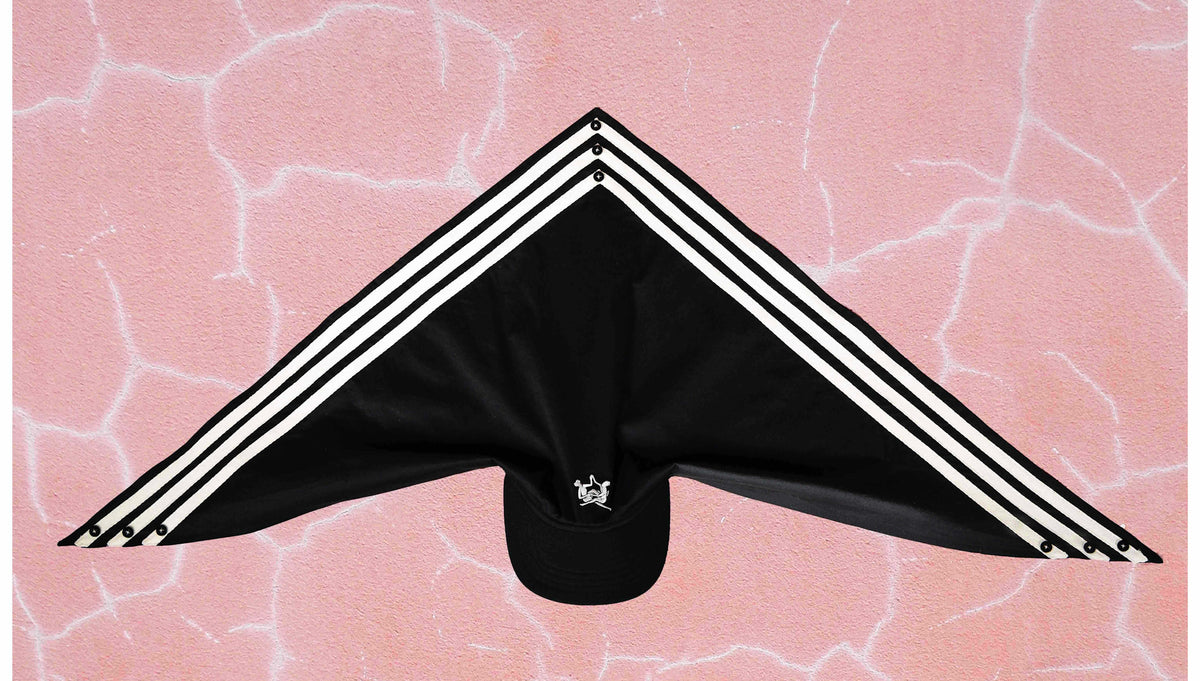
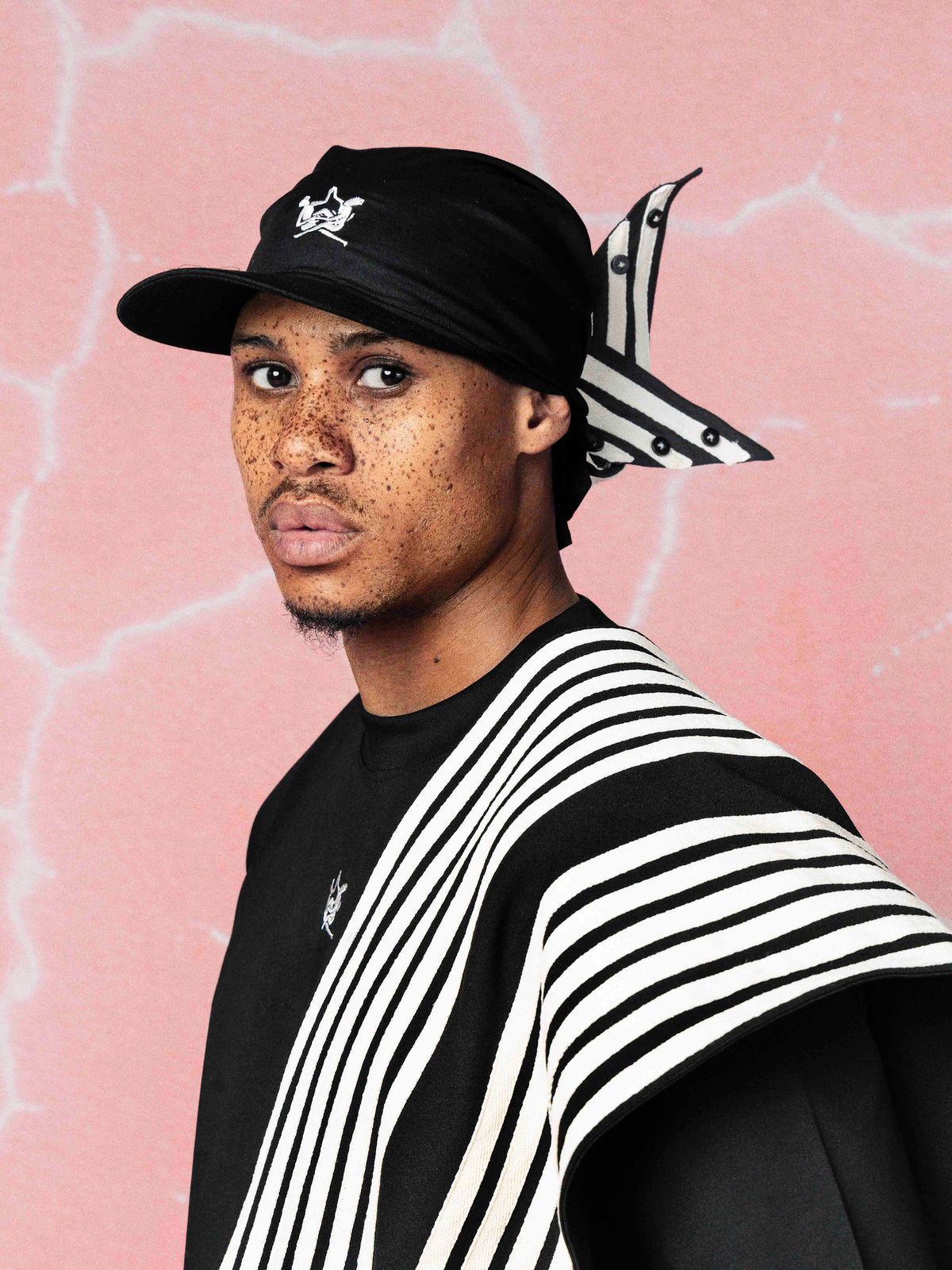
The signature Sisterhood Kite Cap returns for Intimate Cartographies: Tsolo. Constructed as a hybrid of a classic cap bill and an extended triangular headscarf, the cotton silhouette is framed by contrasting ivory banding that echoes the graphic language of the Tsolo Dress and its references to Xhosa traditional dress. Tonal button detailing punctuates each band, while the embroidered Sisterhood emblem signs the crown. Designed to transform according to the wearer, the extended panels can be wrapped, knotted or left loose, shifting between headscarf, bandana and cap.